Avoiding corporate cosplay
May, 2026
Corporate Cosplay
White-spotted pufferfish are artists. Crop circles are their preferred subject—not the corn-field versions that feature in the more fun kinds of conspiracy theories, but beautiful sea-floor circles. They spend days crafting elaborate geometric patterns. Here's a photo:
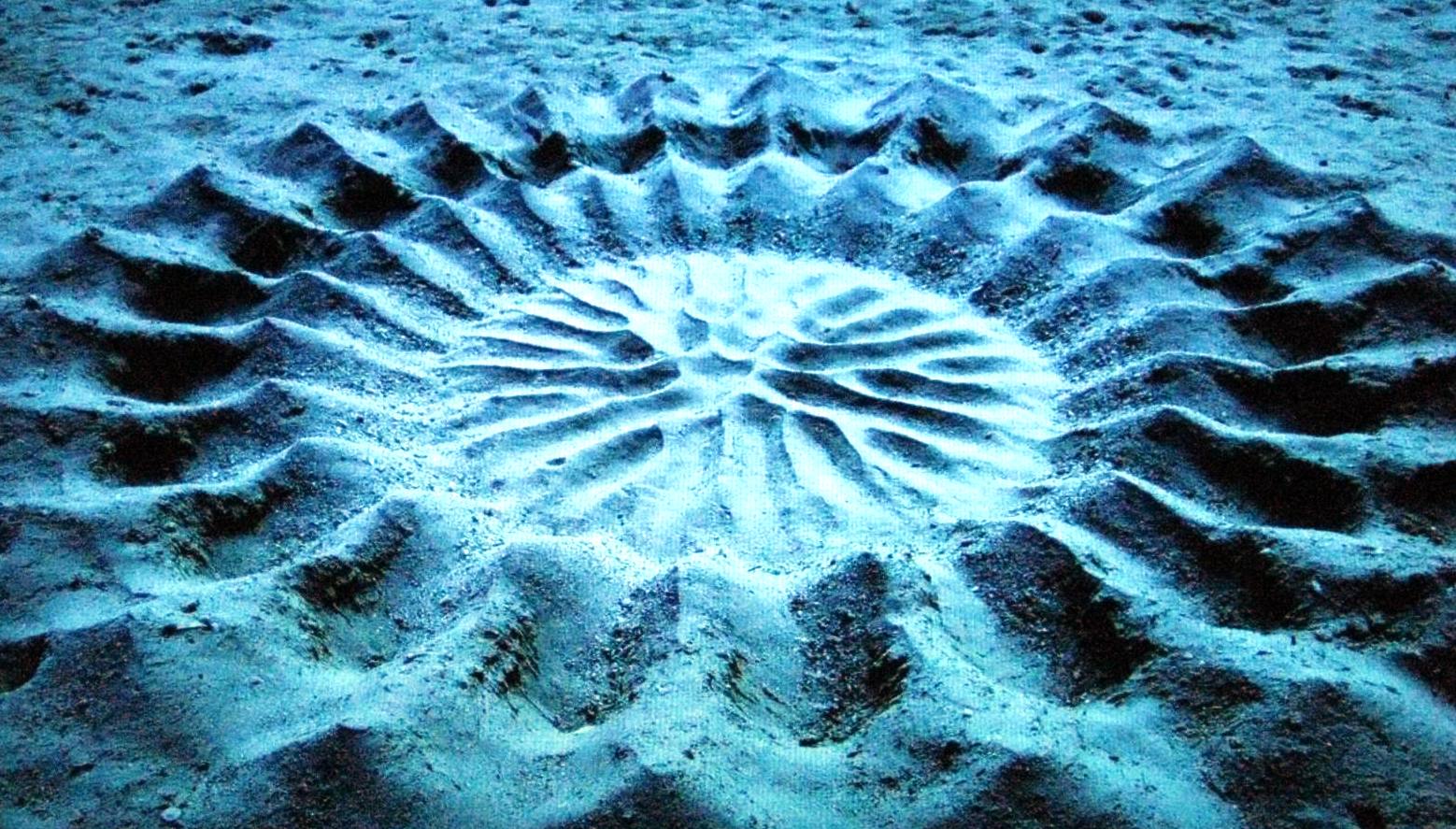
The gentleman pufferfish artists are looking to attract a lady friend, and to provide a calm, safe spot for her eggs to be laid. As far as flirting behaviour goes, it's a better option than the male deep-sea anglerfish, or indeed the typical teenage male human manages.
Pufferfish are much better known for the behaviour they are named after; puffing themselves up to several times their normal size, trying to look big and scary whenever they feel threatened. It's yet another animal behaviour adopted by humans, particularly people running very small businesses.
Desperate to inspire confidence and appear safer, sole traders and freelancers puff themselves up on their marketing pages. Sometimes in relatively harmless ways: referring to "our company", writing a bio in the third person, being the CEO of themselves on LinkedIn.
Other times, people are tempted into outright deception like using stock photos of a non-existent team, or using two different email addresses to pretend to be their own assistant.
It's all corporate cosplay, dressing up a small business as something much larger to appear more impressive, to inspire more confidence. Puffing themselves up can be harmless, but the same intention can also prompt more dangerous activities.
Size matters
Large companies do have real benefits. They have more resources, greater access to hiring pools, and the financial capacity to weather difficult times or undercut their competition.
To customers, who can only judge from the outside until they spend their money and find out, larger companies can represent stability, consistency, and safety.
So it's understandable that small businesses are tempted to make themselves look bigger in order to appear just as safe and stable and effective as the larger alternatives. And if that was the only outcome of the pretence, it might just work out fine.
The risks of corporate cosplay
In practice, when small companies pretend to be large, the characteristics they can actually adopt are not the useful ones. They can't offer 24/7 support, free shipping, or global service centres. The things which actually require scale remain out of reach.
What they can copy are things like fancy job titles, wordy-yet-meaningless mission statements, and the sort of corporate language that turns a price rise into an "exciting value realignment".
They can't build real planes, but they can build a cargo-cult version on their island. All of the language and the look of a large company, but with none of the genuine customer benefits.
The more human alternative
If you're a small business, don't try to hide it. No, you probably won't convince an enterprise buyer to make an order with you, but that was always unlikely.
What you can do is to be more human. Be someone that can genuinely recognise a customer's name in the support queue and carry on a real conversation beyond "Hi, {FIRSTNAME}!"
You can develop trust based on personal interactions, and you can know your customers in a way that a giant company just cannot justify investing in.
Your smallness allows for the sort of yogic flexibility that large companies can never replicate. Adjust your terms for a good customer, bend the rules when it makes sense in the moment.
Change direction when something isn't working because you only have to convince a handful of people. People like to deal with people they like.
Dressing up is fun
Maybe your goal is to become a massive multinational one day, or a regional giant. By all means, run at that goal. Buy yourself that fancy briefcase, if it helps you keep working.
But "dress for the job you want" does not apply to companies. You're just applying constraints before they are necessary. While you are small, don't throw away all the built-in benefits.
You can still be a pufferfish: make your art, attract your customers, seal the deal.
Thanks for subscribing to More Human. If you know of a small business who could use some help talking to their customers, why not send them to morehumancontent.com.
This article first appeared in the May 12th, 2026 edition of the More Human newsletter.
Get More Human
A free weekly email newsletter full of thoughtful takes and tips for more human small business.
No spam, no AI slop. Some dad jokes. Unsubscribe at any time.